SPARC CLINICAL COURSE · COURSE I

Facial skin cancer management for GPs.

A practical, consultant-led course covering lesion assessment, biopsy and excision planning, facial margins, direct closure, complications and referral.

Sat 29 Aug 2026 · Sunshine Coast
A$995 incl GST·20 places
RESERVE A PLACEVIEW THE PROGRAM
Founding-cohort rate ends in 4d 5h
Faculty2 surgeons + 2 facilitators
For GPssmall cohort of 20
Scopeassess · biopsy · excise · refer
CPDRACGP · ACRRM (in progress)
Practical~4 hrs practical + longitudinal case
01SECTION
THE CLINICAL DECISIONS

The difficult part is rarely the stitch.

Facial skin cancer management depends on a series of small but consequential decisions: identifying the lesion, choosing the right biopsy or excision, selecting an appropriate margin, planning the closure and recognising when the safest decision is referral. This course is built around those decisions.

  1. 01

    Assess

    Recognise the common facial presentations of BCC, SCC and pigmented lesions. Identify high-risk features, anatomical danger zones and lesions that require referral before intervention.

  2. 02

    Plan

    Choose between biopsy, excision and referral. Plan margins, photography, specimen orientation, consent and documentation before touching the skin.

  3. 03

    Excise

    Perform elliptical excision and layered direct closure while respecting facial subunits, relaxed skin tension lines and critical underlying anatomy.

  4. 04

    Manage

    Respond appropriately to bleeding, haematoma, infection, wound-edge compromise, dehiscence, suture removal, scar care and the cosmetically disappointing result — and know when further specialist care is required.

02SECTION
FACULTY AND FORMAT

Two consultants. Two facilitators. Direct expert feedback.

Twenty clinicians. Four groups of five. Two consultant plastic surgeons, supported by two experienced clinical facilitators, so every rotation station has an instructor present. Direct expert feedback throughout the practical sessions.

CO-FOUNDER, SPARC INSTITUTE

Ryan Sugrue

MB BCh BAO · MCh · Dip Hand · FRCS (Plast)

Consultant plastic and reconstructive surgeon and co-founder of SPARC Institute. Ryan is the founder of ThePlasticsFella, an international plastic surgery education platform used by clinicians across more than 180 countries. His clinical practice includes skin cancer surgery, facial reconstruction and multidisciplinary management of cutaneous malignancy.
CO-FOUNDER, SPARC INSTITUTE

Ryan Livingston

MB BCh BAO · MCh · Dip Hand · FRCS (Plast)

Consultant plastic and reconstructive surgeon and co-founder of SPARC Institute. Ryan established the plastic surgery service on the Sunshine Coast and has decades of experience in skin cancer surgery, reconstruction and the management of complex surgical complications.

clinician places · 4 groups of 5
20
clinician places · 4 groups of 5
consultant surgeons + clinical facilitators
2 + 2
consultant surgeons + clinical facilitators
practical and simulation-based learning
4+ hrs
practical and simulation-based learning

Practical training is conducted on facial simulation models. No live patients are used, and no participant-to-participant procedures are performed.

Before, during and after the workshop
Everything included+
Before

Pre-course preparation

  • Approximately 90 minutes of pre-course learning
  • Facial lesion recognition primer
  • High-risk facial anatomy map
  • Pre-course knowledge check
On the day

In the room

  • Full-day consultant-led workshop
  • Facial simulation models
  • Instruments and consumables
  • Catering
  • Individual take-home practice kit
After

Take home

  • Facial lesion quick-reference guide
  • Margin and referral guide
  • Consent template
  • Procedure-note template
  • Patient aftercare template
  • Certificate of completion
03SECTION
THE PROGRAM · ONE DAY
08:00 — 17:15

Technique and judgment, taught in the same day.

One patient's journey anchors the day. You move from lesion assessment and planning, into a 90-minute core laboratory where every participant performs a full facial excision and closure, then through four anatomical stations that pair genuine technique with the harder clinical decisions — margins, danger anatomy, referral thresholds and aftercare — with faculty at your shoulder throughout.

practical and simulation-based learning
4+ hrs
practical and simulation-based learning
groups of five across four stations
4 × 5
groups of five across four stations
Part 01
08:15 – 09:45
MORNING · CONSULTATION

Assessment and the decision

Each group of five is assigned a facial lesion case at the start of the day. The same patient is followed through the entire program — from the first consultation to the histology result.

  1. 08:00CASE-BASED

    Arrival and case assignment

    Coffee, groups of five assigned, one facial lesion case handed to each group. That case is the spine of the day.

  2. 08:15DIDACTIC

    Framing the GP's role

    Where the GP sits in the facial skin cancer pathway — what is safely managed in primary care, and what belongs with a plastic or dermatologic surgeon.

  3. 08:30CASE-BASED

    Consultation and lesion assessment

    History, examination and reading the lesion on facial skin. High-risk features, anatomical danger zones and the biopsy vs. excise vs. refer decision — worked through on each group's case.

09:45 – 10:05 · morning break
Part 02
10:05 – 11:20
MORNING · PLANNING

Margins, consent and the operative plan

Everything that has to be decided before the skin is touched — margins, photography, specimen orientation, consent, local anaesthetic choice and anticoagulation — applied to the same case each group carries. By lunch, each group has produced a management decision, a marked clinical photograph, a proposed margin, a pathology request, a consent plan, an anticoagulation plan, and a follow-up and histology-tracking plan for their case.

  1. 10:05CASE-BASED

    Margins, photography, specimen orientation and pathology request

    Selecting margins by lesion type and location, orienting the specimen, photographing the field and writing a pathology request that returns a usable answer.

  2. 10:45CASE-BASED

    Consent, LA and anticoagulation

    Structured facial consent. Local anaesthetic choice, safe volume and infiltration technique. Managing patients on anticoagulants and antiplatelets. Each group produces the operative plan for their case.

Part 03
11:20 – 12:50
PRACTICAL LABORATORY

Core excision and layered closure

Ninety minutes of practical technique on facial simulation models. Every participant completes at least one full simulated excision and layered closure during this laboratory. This is not basic suturing — the value is facial-specific refinement and direct correction of technique.

  1. 11:20PRACTICAL

    Core excision laboratory (90 min)

    Facial incision orientation, handling thin and sun-damaged skin, haemostasis, safe undermining, reducing tension, buried dermal placement, edge eversion, fine epidermal closure, avoiding landmark distortion, and suture and dressing selection. Direct closure only.

12:50 – 13:35 · lunch
Part 04
13:35 – 15:55
ANATOMICAL ROTATIONS

One technique station. Three judgment stations.

Four groups of five rotate through four anatomical stations. Two models per station. Participants work in pairs, and the decision-lead role rotates. Only the cheek and forehead station involves a completed simulated excision — the nose, lip and periocular stations are explicitly non-excision judgment stations, reinforcing referral thresholds.

  1. 13:35PRACTICAL

    Anatomical rotations (4 × 35 min)

    Groups of five. One consultant or clinical facilitator per station. Each station has one explicit participant task.

    1. ITECHNIQUE
      Cheek and periocular
      Simulated cheek excision + layered closure

      Apply and refine the complete direct-closure sequence on the cheek — design, haemostasis, undermining, tension reduction and layered closure — and mark the periocular boundary where that same technique becomes unsafe.

    2. IICLINICAL JUDGMENT
      Forehead and temple
      Map the temporal branch · plan a safe biopsy or refer

      Map the danger anatomy of the temple — temporal branch of the facial nerve, superficial temporal vessels — plan a safe biopsy or referral, and articulate where forehead undermining crosses into unacceptable risk.

    3. IIICLINICAL JUDGMENT
      Nose
      Assess · biopsy vs refer · mark the plan

      Assess a simulated lesion, choose biopsy versus referral, mark the proposed plan and justify why routine elliptical excision is inappropriate on the nose.

    4. IVCLINICAL JUDGMENT
      Lip
      Landmark · plan · recognise the referral threshold

      Identify vermilion and white-roll landmarks, plan the intervention, and demonstrate the closure vectors that would distort the lip — and therefore require referral.

15:55 – 16:15 · afternoon break
Part 05
16:15 – 17:15
AFTERNOON · CASE DEBRIEF

Histology, complications and disposition

Active, not lecture. Each group's case is picked back up with a histology result and a complication card, worked through in short cycles: decide, present, correct, rehearse the patient conversation.

  1. 16:15CASE-BASED

    Histology returns · each group receives its result

    Reading the report, tracking systems that stop results from falling through, and what a positive or close margin actually requires next.

  2. 16:30CASE-BASED

    Complication card · five minutes to decide

    Each group draws a complication or unexpected-result card — bleeding, haematoma, infection, wound-edge compromise, dehiscence, suture-removal timing, scar care or a cosmetically disappointing result. Five minutes to decide the next step, then explain the plan to the room.

  3. 16:50CASE-BASED

    Faculty correction and the patient conversation

    Faculty corrects the decision and provides the practical framework. Each group then rehearses the patient conversation — including the positive-margin conversation and referral disposition.

  4. 17:05CASE-BASED

    Referral thresholds and takeaways

    Final disposition of each group's case. Referral thresholds consolidated across cheek, nose, lip and periocular. Practical takeaways for Monday morning.

17:15 · close
04SECTION
BY THE END OF THE DAY

By the end of the day, you will be able to:

  1. 01

    Assess common facial skin cancers and identify high-risk clinical features.

  2. 02

    Choose appropriately between biopsy, excision and specialist referral.

  3. 03

    Select margins based on lesion type, risk and facial location.

  4. 04

    Document, photograph and consent facial procedures appropriately.

  5. 05

    Perform elliptical excision and layered direct closure on facial simulation models.

  6. 06

    Recognise complications, respond to positive margins and establish an appropriate referral plan.

RESERVE A PLACE
05SECTION
WHO IT IS FOR

Designed for GPs who already excise skin.

This course is designed for GPs and other appropriately registered clinicians who already perform basic skin excision and want to improve their decision-making and direct-closure technique on the face.

Suitable for
  • General practitioners
  • GP registrars with procedural experience
  • Skin cancer medicine practitioners
  • Rural generalists
  • Nurse practitioners undertaking skin procedures within their authorised scope
Not suitable for
  • Complete procedural beginners
  • Clinicians seeking flap or graft training
  • Clinicians seeking formal dermoscopy training
  • Clinicians seeking Mohs surgery training
  • Participants without appropriate Australian professional registration

Completion of the course does not alter a participant's authorised scope of practice or indemnity cover. Participants continue to practise within their workplace credentialling and organisational requirements.

06SECTION
LOCATION

Held on the Sunshine Coast.

A single private venue on Queensland's Sunshine Coast. Approximately 90 minutes north of Brisbane by road, with a domestic airport at Maroochydore. Full logistics and accommodation notes are sent on booking confirmation.

Region
Sunshine Coast, QLD
Nearest airport
Maroochydore (MCY)
From Brisbane
~90 min by road
Venue type
Private teaching studio
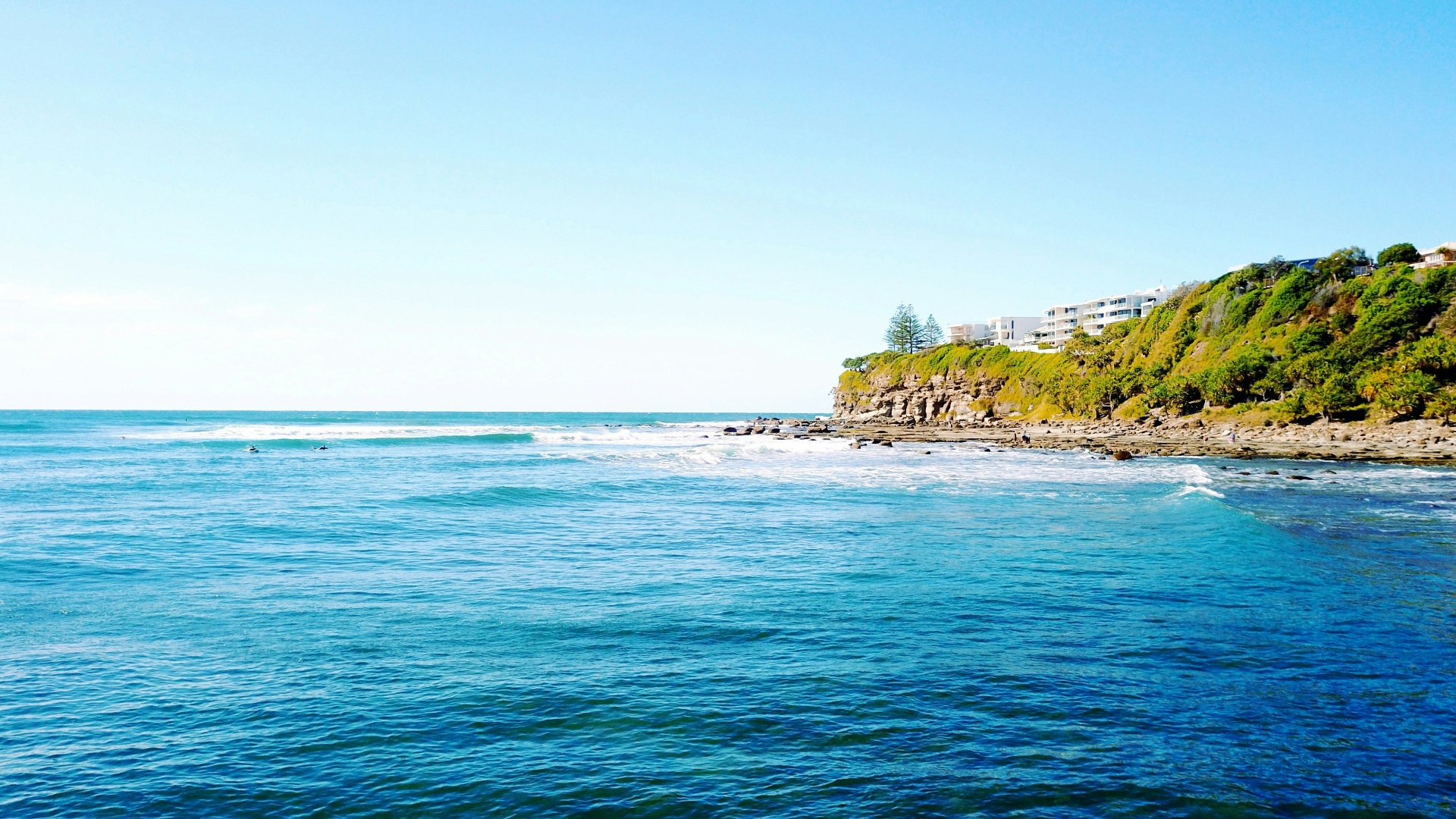
Sunshine Coast hinterland at golden hour, Glass House Mountains in the distance
07SECTION
COMMON QUESTIONS

Frequently asked.

  • Almost four hours of practical and simulation-based learning: a 90-minute core excision laboratory (where every participant completes a full simulated excision and layered closure), four anatomical rotations in groups of five — one technique station and three judgment stations — and the operative-planning and complication segments of the longitudinal case. The rest of the day is consultation, assessment, consent, histology and disposition — worked through on your group's case, not delivered as lectures.

  • You should already be comfortable with instruments, basic elliptical excision and simple interrupted suturing. This is a facial-refinement course, not an introduction to skin surgery.

  • No. The course is deliberately scoped to direct closure on facial subunits — plus the referral thresholds for when a flap, graft or Mohs is the right answer. That referral pathway is a core teaching point.

  • No. The course provides specialist-led education. It does not alter your Ahpra scope, medical indemnity or workplace credentialling — you should confirm your insurer covers facial excision within your rooms.

  • No. All practical work is on facial simulation models.

  • Nothing. Instruments, models, sutures, consumables, reference cards and a take-home practice kit are all included.

  • RACGP and ACRRM CPD accreditation is in progress. Participants may also self-record the activity through their CPD home in the interim. Confirmed CPD status will be published here before booking closes.

  • On the Sunshine Coast, Queensland. The exact venue is confirmed on booking.

  • Cancellations more than 30 days before the course are refunded less a A$95 administration fee. Places can be transferred to another eligible clinician at any time. Full terms are provided on booking confirmation.

08SECTION
REGISTRATION
Founding-cohort rate ends in 4d 5h
A$995 → A$1,495

Join the founding GP cohort.

Submit your details to hold a place. We will confirm eligibility and send the payment link. Your place will remain reserved for 48 hours.

Date
Sat 29 Aug 2026
Location
Sunshine Coast, QLD
Cohort
20 clinician places
Fee
A$995 incl GST
First name *
Last name *
Email *
Mobile *
Profession *
  • Place held for 48 hours
  • Payment link sent after confirmation
  • Transfer to another eligible clinician permitted
  • Full terms provided before payment

Founding-cohort rate. Closes 10 August 2026, or when the cohort fills. Subsequent cohorts will be offered at A$1,495.

Cancellations more than 30 days before the course are refunded less a A$95 administration fee. Places may be transferred to another eligible clinician at any time. Full cancellation and transfer policy is provided on booking confirmation.

RACGP and ACRRM CPD accreditation in progress.

SPARC
INSTITUTE

A surgeon-led institute for plastic surgery education, research and clinical skills on Queensland's Sunshine Coast.

Sunshine Coast, Queensland · Australia
© 2026 THE SPARC INSTITUTE